
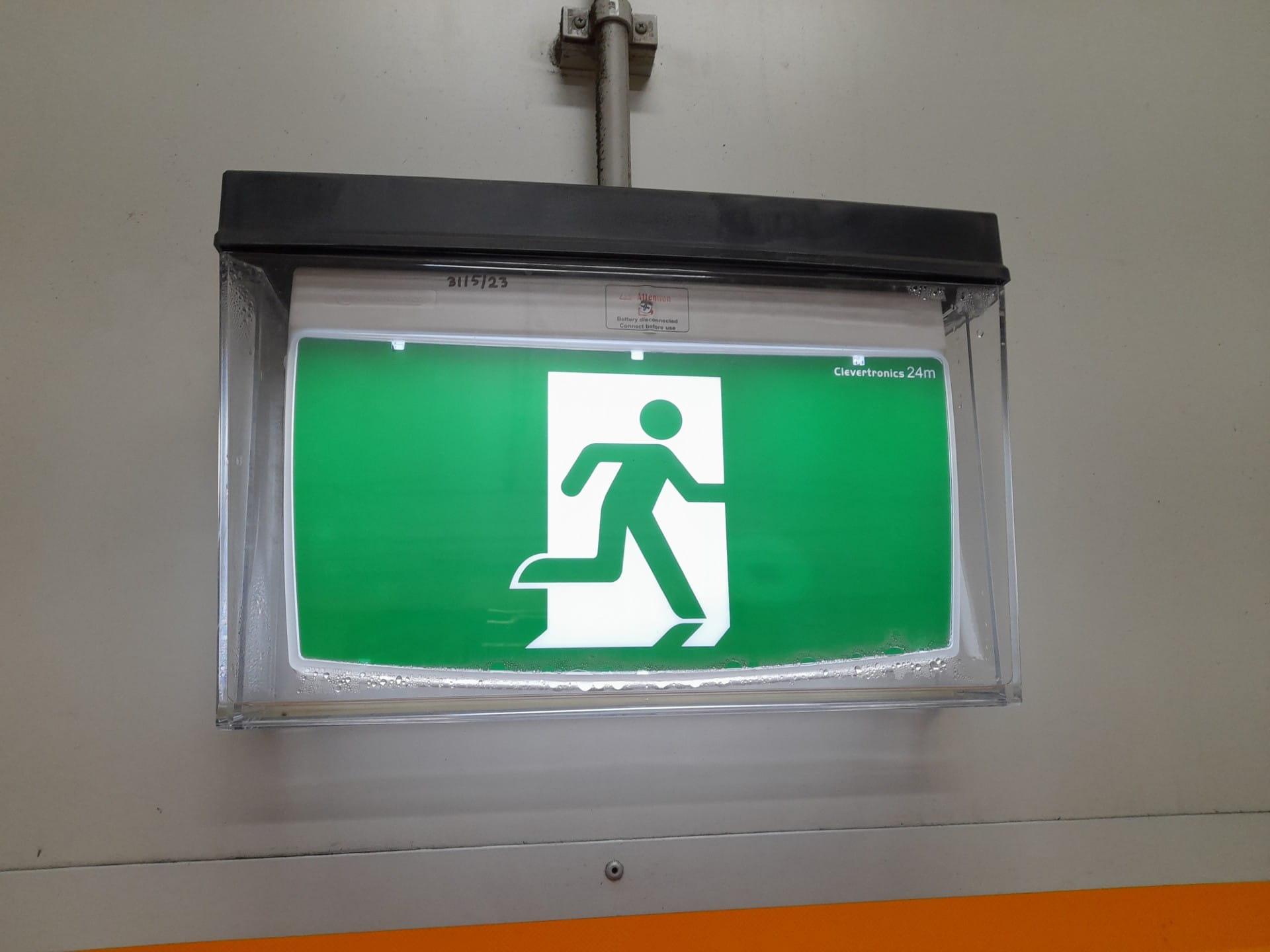
Why Emergency Exit Lighting Compliance Matters
In any commercial or public building, emergency exit lighting plays a critical role in ensuring safe evacuation during unexpected situations. Whether it’s a power outage, a building fire, or another emergency, properly installed and maintained systems help guide occupants to safety when visibility is compromised.
Emergency exit lighting requirements in Australia are governed by the strict regulations in AS/NZS 2293, and for good reason. Without compliant systems in place, buildings expose occupants to serious risks and owners to potential legal consequences.
Failing to meet AS/NZS 2293 standards can result in the following:
- Increased safety hazards during emergencies
- Heavy fines and regulatory penalties
- Insurance complications or claim rejections
- Liability risks for building owners and managers
Understanding and adhering to AS/NZS 2293 is not just a matter of ticking a compliance box; it’s about protecting lives and maintaining a safe, legally compliant environment.
What Is AS/NZS 2293?
AS/NZS 2293 is the Australian and New Zealand standard that sets out the requirements for emergency escape lighting and exit signage systems. It provides detailed guidelines on the design, installation, operation, and maintenance of these systems.
The AS/NZS 2293 standard applies to a wide range of buildings, including commercial offices, industrial facilities, retail spaces, and other public places.
It is important to distinguish between two key components:
Emergency lighting: Illuminates pathways to ensure safe movement during evacuation when visibility is compromised.
Exit signage: Clearly marks exits so occupants can find their way out quickly with little or no guidance.
Both are essential under the emergency exit lighting requirements of Australia, and both must meet the specifications outlined in AS/NZS 2293.
Buildings That Must Comply with AS/NZS 2293
Compliance with AS/NZS 2293 is mandatory for most non-residential and commercial buildings, as well as many multi-use developments. If your property is accessible to the public or houses employees, it is likely to be subject to emergency exit lighting requirements.
Common building types that must comply with AS/NZS 2293:
Offices, Retail Spaces, and Warehouses
Commercial workplaces and office spaces must provide clear, well-lit escape routes to ensure that staff and visitors can exit safely during emergencies. This is especially important for workspaces that accommodate many workers at any given time, ensuring everyone is able to safely direct themselves outside when necessary
Healthcare and Aged Care Facilities
Hospitals and care homes have additional safety obligations due to their vulnerable occupants, making strict adherence to AS/NZS 2293 essential. Many bed-bound or mobility-impaired people may depend on others to help them exit a building, so extra diligence for proper signage is crucial.
Educational Buildings and Public Venues
Schools, universities, theatres, and event spaces must maintain reliable emergency lighting systems to handle large crowds. In spaces where many children or elderly people may be present, clear, visible emergency exit lighting is essential to ensure safe and effective escape.
Multi-Storey Residential and Mixed-Use Buildings
Apartment complexes and mixed-use developments often require compliant systems in shared areas like corridors, stairwells, and car parks. These shared, common areas are critical zones that require a compliant emergency lighting system to ensure safe evacuation during a power outage or fire.
Emergency Exit Lighting Requirements Explained
The emergency exit lighting requirements outlined in AS/NZS 2293 are highly specific. Here is a breakdown of the key elements you need to understand:
Minimum Illumination Levels
Emergency lighting must provide sufficient brightness along evacuation routes to ensure visibility. This includes pathways, exits, and critical areas.
Placement of Emergency Luminaires and Exit Signs
Lighting fixtures and exit signs must be strategically positioned to:
- Clearly identify exits
- Illuminate paths of travel
- Avoid shadows or dark spots
Coverage Areas
Under AS/NZS 2293, emergency lighting must cover:
- Stairways and ramps
- Corridors and hallways
- Intersections and changes in direction
- Open areas and assembly points
- Residential car park garages
Duration of Operation
In the event of a power failure, emergency lighting systems must operate for a minimum duration (typically 90 minutes) to allow safe evacuation.
Meeting these requirements for emergency exit lighting ensures occupants can navigate safely even in low-visibility or high-stress situations.
Types of Emergency Lighting Systems
Different buildings require different system designs. AS/NZS 2293 recognises several types of emergency lighting systems.
Maintained Systems
These lights remain on at all times and continue operating during a power outage. They are often used in high-traffic or public areas.
Non-Maintained Systems
These only activate when the main power supply fails, making them more energy-efficient for certain applications.
Self-Contained Emergency Lights
Each unit has its own battery and operates independently. These are common in smaller buildings or retrofits.
Centrally-Supplied Systems
A central battery system powers multiple lights throughout the building. These are often used in larger or more complex facilities.
Choosing the right system is critical for meeting AS/NZS 2293 and ensuring full compliance.
Testing & Maintenance Obligations Under AS/NZS 2293
Installing an emergency exit light system is only the first step. To meet current compliance standards, ongoing testing and maintenance are mandatory under AS/NZS 2293.
Annual or Semi-annual Testing
New systems must be tested at least 24 hours after installation and routinely thereafter. Routine functional tests must be carried out either annually (every 12 months) or semiannually (every 6 months) to ensure lights activate correctly during power loss.
Annual Discharge Testing
A full discharge test verifies that systems can operate for the required duration.
Record-Keeping and Logbooks
Accurate records must be maintained, documenting all inspections, tests, and repairs.
Routine Inspections
Regular visual inspections help identify issues such as damaged fittings, faulty batteries, or obstructed lights.
Failing to meet these maintenance obligations can render an otherwise compliant system non-compliant under AS/NZS 2293.
Common AS/NZS 2293 Compliance Mistakes
Even well-intentioned building owners can fall short of the requirements of AS/NZS 2293. Some of the most common mistakes include:
- Incorrect light placement
- Inadequate illumination
- Missing or incomplete records
- Neglected maintenance
Avoiding these issues is key to maintaining full compliance with as/nzs 2293.
Responsibilities of Building Owners & Managers
Responsibility for compliance with AS/NZS 2293 typically falls on building owners, property managers, or business operators. Having a trusted electrician partner can help managers meet all their obligations and minimise costs.
Legal Responsibility
You are legally required to ensure that your building complies with both federal and state emergency exit lighting requirements at all times.
Ongoing Maintenance
Compliance is not a one-off task: it requires continuous monitoring, testing, and maintenance.
Audit Preparedness
Regulatory inspections can occur at any time. Having up-to-date systems and documentation ensures you are always prepared when a surprise inspection comes knocking at your door.
Understanding your obligations under as/nzs 2293 helps minimise risk and maintain a safe environment for occupants.
Upgrading or Retrofitting Emergency Exit Lighting
Older systems may no longer meet current AS/NZS 2293 standards, especially as technology evolves. Knowing when to upgrade or reinstall emergency and ceiling lighting is crucial to maintaining compliance in your commercial or public building.
When to Upgrade
Upgrading your system can help ensure compliance with emergency exit lighting requirements while reducing long-term maintenance costs.
- Frequent system failures
- Outdated fittings or technology
- Non-compliance identified during inspections
LED Emergency Lighting
Many buildings upgrade their emergency exit lighting to newer LED models. Modern LED systems offer many benefits, such as:
- Improved energy efficiency
- Longer lifespan
- Better illumination quality
Retrofitting outdated or failing emergency lighting can also improve safety, bring older buildings up to current AS/NZS 2293 standards, and increase overall property value.
| Upgrading or Retrofitting Emergency Exit Lighting | |
|---|---|
| Category | Details |
| Why Upgrade? | Older systems may no longer meet current AS/NZS 2293 standards, especially as technology evolves. Upgrading ensures compliance with emergency exit lighting requirements in Australia and improves overall building safety. |
| When to Upgrade |
|
| LED Emergency Lighting Benefits |
|
| Retrofitting Benefits |
|
Why Use a Licensed Electrician for Emergency Lighting Compliance
If you think you can simply screw in an EXIT sign and flip the switch, then think again—emergency exit lighting is not a DIY job. Emergency lighting systems must be installed, upgraded, and maintained by qualified professionals to meet the requirements of AS/NZS 2293.
Electrical Safety and Legal Compliance
Licensed electricians ensure all installations meet Australian safety regulations and standards.
Correct System Design and Certification
A professional will design a system tailored to your building’s layout, ensuring full compliance with Australia’s emergency exit lighting requirements.
Ongoing Support and Maintenance
Regular servicing and testing by experts helps maintain compliance with AS/NZS 2293 over time.
Ensure Your Building Meets AS/NZS 2293 Standards with Approved Electrix
As a commercial building owner or manager, staying compliant with AS/NZS 2293 isn’t just about avoiding heavy penalties; it’s about protecting people and ensuring your building is prepared for any emergency.
If you’re unsure whether your system meets current emergency exit lighting requirements, or if you need installation, upgrades, or testing, working with experienced and professional electricians is the best course of action.
Approved Electrix can help you design, install, test, and maintain fully compliant systems, giving you confidence that your building meets all AS/NZS 2293 requirements while keeping occupants safe.
Get a quote from us today for a safety compliance check!
