
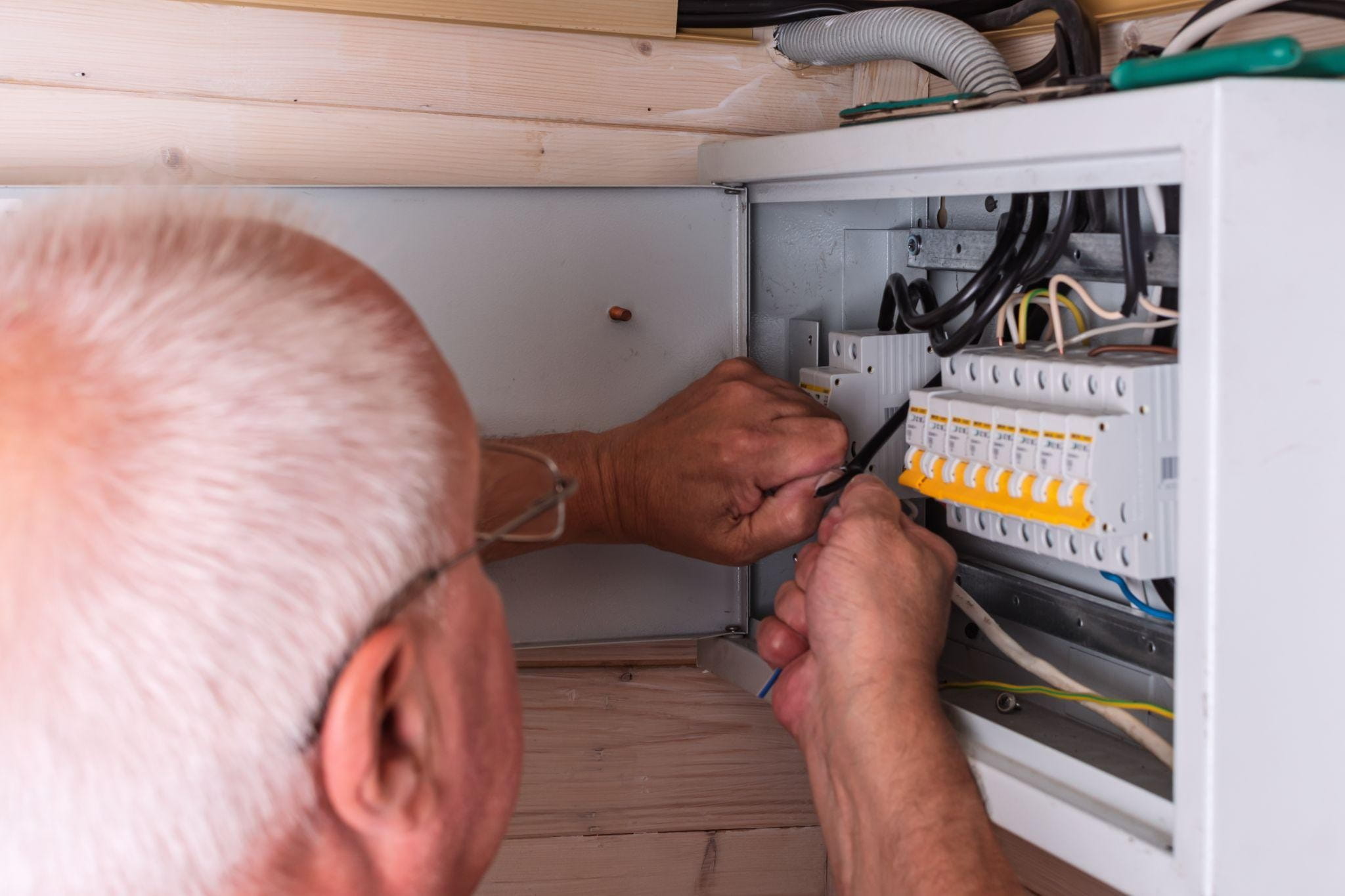
One of the main ways your home electrical system remains safe and compliant with requirements is through its switchboard and circuit breakers. But do you know the difference between the two?
A switchboard is the physical panel or command centre that distributes electricity throughout a building, whereas a circuit breaker is an individual safety component housed inside that switchboard. Your switchboard helps safely direct and distribute power throughout your property, and the circuit breaker automatically cuts power during overloads or short circuits.
Whether you are upgrading your home’s current system or looking to modernise an older property, it can be confusing to know which type you ought to install. Do you know the difference between an RCD, an MCB, and an RCBO?
You likely do not, but a licensed electrician will! In this guide, we explain the differences between RCDs, MCBs, and RCBOs so you can make the most informed decision when protecting your home.
What Is an RCD?
Residual Current Device (Safety Switch)
An RCD, or Residual Current Device, also known as a safety switch, is a panel found somewhere on a property filled with various switches. They are designed to detect a current leak and prevent electric shock by shutting down power.
Literally, safety switch off. An RCD safety switch in Australia must comply with applicable standards to provide adequate residual current protection. RCDs can only be installed by a licensed electrician, as well.
What does an MCB do?
Miniature Circuit Breaker
An MCB, or a Miniature Circuit Breaker, is an automatic switch commonly found inside an RCD. Its primary job is to protect your home’s wiring against electrical overloads and short circuits.
An MCB trips and breaks the circuit when too much current is drawn, preventing overheating and potential electrical fires. Unlike RCDs, however, MCBs do not protect people from electric shocks.
What does RCBO stand for?
Residual Current Breaker with Overcurrent
An RCBO, meaning Residual Current Breaker with Overcurrent, is a 2-in-1 device that combines the features of an RCD and an MCB. It offers dual protection by guarding against both electrical leakage (electric shock) and overcurrent (overloads/short circuits) in a single unit.
The main difference between an RCBO and an RCD is that while an RCD only detects leakage current to prevent electrocution, an RCBO provides this same personal safety feature plus circuit protection. Instead of requiring separate RCDs and MCBs to fully protect a circuit, a combined circuit breaker safety switch RCBO does the work of both, saving space in your switchboard.
RCD vs MCB vs RCBO: Circuit Protection Comparison
For a switchboard upgrade in Australia, it is important to understand the differences between current devices, safety switches, and circuit breakers. Here is a brief breakdown of the differences between RCD, MCB, and RCBO.
| RCD vs MCB vs RCBO: Key Differences | |||
|---|---|---|---|
| SAFETY FEATURE | MCB | RCD | RCBO |
| Protects overload | ✅ | ❌ | ✅ |
| Protects against electric shock | ❌ | ✅ | ✅ |
| Space saving | ❌ | ❌ | ✅ |
When to Use Each Device
- Use MCB when: basic circuit protection is needed.
- Use RCD when: personal safety is a priority.
- Use RCBO when: full protection is required per circuit.
While there is overlap among all three, MCBs and RCDs are much more specialised, whereas RCBOs are all-encompassing. Modern switchboard design focuses on integrating safety switches and combining them with other devices to optimise space, cost, and safety.
Australian Standards & Compliance
The Energy Safe Victoria guidelines and the Wiring Rules (AS/NZS 3000) mandate that all final sub-circuits in domestic installations must be protected by RCDs. Additionally, residential rental providers must ensure new switchboards are fitted with both modern circuit breakers and RCDs.
Non-compliant boards put your family at risk of electric shock or fire and can severely impact, or even void, your insurance coverage.
Common Mistakes to Avoid
When working with an electrician, it is good to be aware of some practical do’s and don’t’s regarding circuit breakers and safety switches. Here are some common mistakes to avoid when organising your next electrical renovation.
DIY Electrical Work
You should never attempt to perform your own DIY electrical work, especially when circuit safety is involved. Compliance requirements make it clear that only a professional, licensed electrician can repair, install, or upgrade RCDs, MCBs, and RCBOs.
There is no sure way to incorrectly install a panel or overload your circuits than trying to do it yourself. Attempting to make these installations on your own without qualifications can result in property damage, voided insurance, or even death.
Keeping Messy Wiring
Leaving outdated components intact, such as legacy wiring or ceramic fuses, during an upgrade can confuse modern safety sensors. This can result in brand-new switches tripping when you turn on a light or use an appliance at a power point.
Don’t be precious about old electronics! Gut the old system to make room for the new one and any future upgrades you may want.
Only Using MCBs
If you are only using MCBs on your property, you are not actually protected from electric shock! Only by properly installing MCBs in conjunction with an RCD and an RCBO will your property be thoroughly insulated and protected against current leakage and fire hazards.
Benefits of Proper Integration
By properly integrating these devices into your home, you achieve maximum safety. Not only will your whole system be much more reliable and stable, but you will also reduce the risk of fire and electrocution in the future.
Professionally installed circuit protection devices will naturally increase the value of your property, keeping both current residents and future investors safe for years to come.
Protect Your Home with Proper Circuit Protection from Approved Electrix
If your property still relies on outdated circuit breakers or lacks modern safety switch protection, now is the time to act. Faulty or non-compliant switchboards can increase the risk of electrical fires, power faults, and electric shock, putting both your family and your property at risk.
Only a trusted, licensed electrician will know how to install safety switch and circuit breaker components correctly and safely. Don’t wait!
Get a quote from our team of experts at Approved Electrix today to keep your home protected and your power flowing without issues 24/7.
